
Let’s Spill the Tea—and Find Out How it Became the World’s 2nd Most Popular Drink
Tea, a simple infusion of leaves in water, has become one of the most beloved and widely consumed beverages across the globe, second only to plain water. Making an appearance in many cultures over the centuries, tea’s journey from the fertile mountains of ancient China to the farthest reaches of the globe is a tantalizing story of tradition, trade, and transformation.
To many of us, tea takes on a humble persona. However, its impact on societies, economies, and cultures is unmistakable and has shaped the course of history in many parts of the world.
Join us as we explore the origins of tea!
The Mythical Origins of Tea in China
The tea story begins in China over 50 centuries ago, when a fortunate accident resulted in its discovery.
Legend tells us it was first consumed by Emperor Shen Nong, a mythical figure credited with many important inventions in Chinese agriculture and medicine. One day, as he rested under a tree while boiling water, some leaves from the tree blew into his pot. The emperor noticed a pleasant aroma rising from the pot and, upon drinking the infusion, found it to be refreshing and energizing. The tree was a wild tea plant, and so began the long history of tea.

Whether or not this tale is true, tea has been grown and consumed in China for millennia. Early uses of tea were likely medicinal, and it wasn’t until the Tang Dynasty (618–907 CE) that tea was viewed as a pleasure beverage. During this period, tea drinking evolved into a highly refined art form. Lu Yu, a scholar and poet, wrote the first known book on tea, The Classic of Tea (Cha Jing), in which he described the cultivation, preparation, and consumption of tea. This book is considered the first definitive work on tea culture and is still referenced today.
Tea Spreads Through Asia
As tea culture flourished in China, it began to spread to neighboring regions. Tea reached Japan around the early 9th century, thanks to Buddhist monks who had traveled to China. These monks discovered that tea helped them stay awake during long hours of meditation, and they brought seeds and tea culture back to Japan. Over the centuries, tea became deeply intertwined with Japanese culture, particularly through the development of the chanoyu, or Japanese tea ceremony. This ritualized practice focuses on aesthetics, mindfulness, and simplicity—and remains an important Japanese tradition.
In other parts of Asia, tea spread to countries like Korea, Vietnam, and India, each adopting and adapting tea to their local customs and preferences. While China remained the epicenter of tea production, these nations began to develop their own tea-growing regions and unique tea cultures.
The Role of Tea in Buddhism and Spirituality
Tea’s spread across Asia is closely tied to the spread of Buddhism, particularly Zen Buddhism. Monks used tea while meditating. They believed it helped them achieve clarity and focus during long sessions. This association helped elevate tea beyond a simple beverage. It now had cultural and religious significance.
Tea ceremonies became expressions of Zen principles, including harmony, respect, purity, and tranquility. The preparation and consumption of tea in itself were viewed as meditative practices. One could gain mindfulness and inner peace simply by preparing some for consumption. This connection has endured for centuries and still influences the ways in which tea is consumed in many parts of the world.
Tea’s Journey to the West: European Discovery
While tea flourished in Asia, it remained largely undiscovered in the Western world until the 16th century, when European explorers and traders began to venture to the East. Portuguese and Dutch merchants were among the first to encounter tea in China and Japan. By the early 17th century, the Dutch East India Company had begun importing small quantities of tea to Europe.
At first, tea was an exotic luxury consumed only by the wealthy. It wasn’t until the British East India Company began importing tea in large quantities in the mid-17th century that tea became more widely available in Europe. England, particularly, developed a strong tea culture. In fact, tea had become the national drink of Great Britain by the 18th century.
The Rise of Tea in Britain
Tea’s popularity in Britain can be attributed to several key developments. First, Queen Catherine of Braganza, the Portuguese wife of King Charles II, is often credited with making tea popular among the English aristocracy. Her love for tea quickly spread through the court and beyond, making it fashionable among the elite.
The British East India Company made great strides in expanding the tea trade, establishing a virtual monopoly on importing tea from China. By the 18th century, tea was being consumed by all levels of British society.
In the early 19th century, Anna, the Duchess of Bedford, introduced the well-known British “afternoon tea” ritual in which sandwiches, scones, and pastries are served alongside tea—a tradition that endures in Britain and other parts of the world.
Britain’s growing demand for tea wasn’t all scones and rainbows. This ritual resulted in enormous profits for the tea trade, which led to history-making geopolitical conflicts, including the Opium Wars of the 19th century.
Britain wanted to balance its trade deficit with China, so it began illegally exporting opium from India to China in exchange for tea. This sparked a series of wars between Britain and China, ultimately resulting in China’s defeat and the forced opening of Chinese ports to British trade.
The Boston Tea Party and Tea’s Role in American History
Tea is also an important part of American history, particularly in the years leading up to the American Revolution.
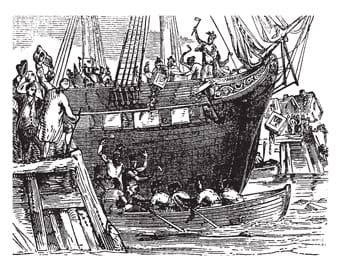
By the mid-18th century, the American colonies were enjoying tea daily. That tea was primarily imported from Britain, but tensions between the colonies and the British government escalated, thanks to taxation and representation issues.
In 1773, the British government passed the Tea Act, which gave the British East India Company the exclusive right to export tea to the American colonies, effectively creating a monopoly. In response, American colonists protested the act by staging the Boston Tea Party. They boarded British ships and dumped all the tea contained on that ship into the Boston Harbor. This insubordinate act became a catalyst for the American Revolution, making tea a symbol of resistance to British rule.
After the Revolution, coffee replaced tea as the beverage of choice in the United States, as drinking tea was considered unpatriotic. However, tea remained a presence in American culture. It has regained popularity, largely due to the rise in consumption of iced tea in the 19th and 20th centuries.
Tea in a Modern, Globalized, Diverse World
Today, nearly every country in the world consumes tea, and each culture puts its own spin on the beverage. From the black teas of India and Sri Lanka to the delicate green teas of Japan and China, the world of tea is incredibly diverse.
In countries like India and China, tea remains a vital part of daily life. India, in particular, is famous for its strong, spiced chai tea, while China continues to produce some of the world’s finest green, oolong, and pu-erh teas. Meanwhile, in countries like Britain and Russia, black tea is still the most popular variety, often consumed with milk and sugar.
In the United States, tea is becoming even more popular. This resurgence is driven by a growing interest in health and wellness. Green tea, in particular, is prized for its antioxidant properties, while herbal teas and specialty blends are becoming increasingly popular among health-conscious consumers.
The Future of Tea
As tea continues to evolve, it’s widely understood that its lasting appeal lies in its ability to adapt to changing tastes and preferences. It can be savored as part of a tranquil tea ceremony in Japan, in a bustling London café, or while rocking on a sunny porch in the American South.
It seems that tea will remain the universal beverage—one capable of transcending borders and cultures.
The tea industry is evolving, however. It must stay relevant amid modern challenges like climate change and globalization. It must remain sustainable and adhere to ethical practices—which it has.
Many tea producers are now focusing on fair trade, organic farming, and production methods that are friendly to our environment. This will help ensure that tea remains a sustainable crop for generations to come.

Keep Enjoying Tea with Varieties from East Indies Coffee & Tea
It may have originated in China, but tea now enjoys global dominance as the world’s most popular beverage after water. Its impact throughout the centuries has been intense and makes historical review something that’s both informative and compelling.
Drink tea for its health benefits. Enjoy its calming effects, its rich flavor, and aromatic pleasures. No matter your preference, tea will continue to unite people, solidify rituals and traditions, and deliver connective moments for people around the world.
As tea continues to adapt and evolve, its legacy as a timeless and beloved beverage will endure for centuries to come. What will your part in the story be?
You can become a reseller for East Indies Coffee & Tea. Browse our many varieties of tea and then apply to resell our products. You’ll also want to look into all the services we offer, including custom packaging, custom blends, private labeling, fundraisers, and more.
More interested in coffee? We have that, too! Browse all the varieties, roasts, and flavors of coffee we offer, and contact us for more information.